The most common question I am asked is, “What’s Next?” Given the current reports of the veracity of the black fly population in Labrador this summer, my most frequent answer at the moment is, “Bug Bait.” I can’t believe how quickly the summer is passing and that we’re on a seven day countdown to our canoe expedition on the Kanairiktok River in Labrador. Given my experience of the black flies in 2011 on the Notakwanon River which was “a good year for bugs,” I suspect I’ll be spending much of my time in “my happy place,” my bug jacket once again.
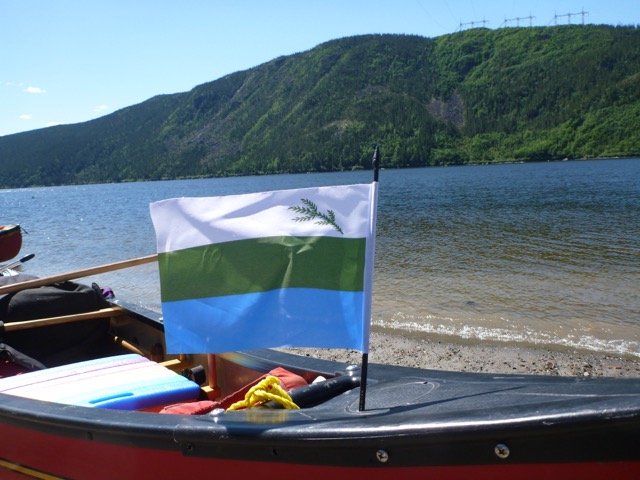
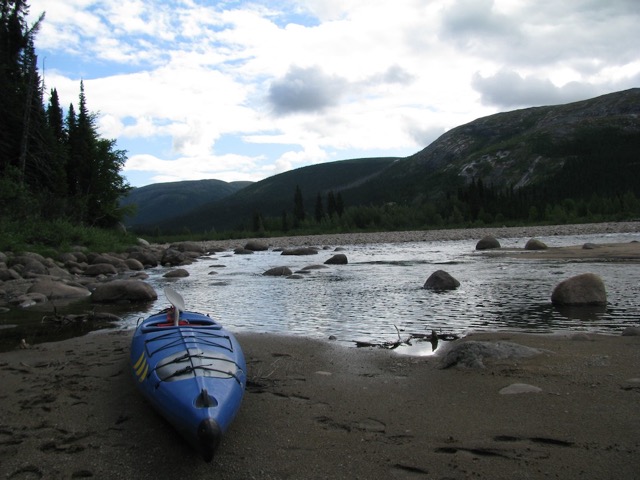
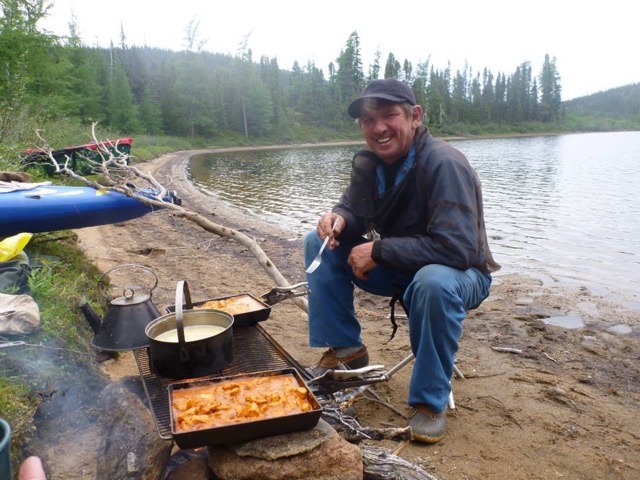
We will be flying via float-equipped Twin Otter to Lake Shipiskan and paddling the Kanairiktok River all the way to the sea and then 70 kilometres along the Labrador coast until we reach Hopedale. We’ll then take the coastal boat back to Goose Bay.
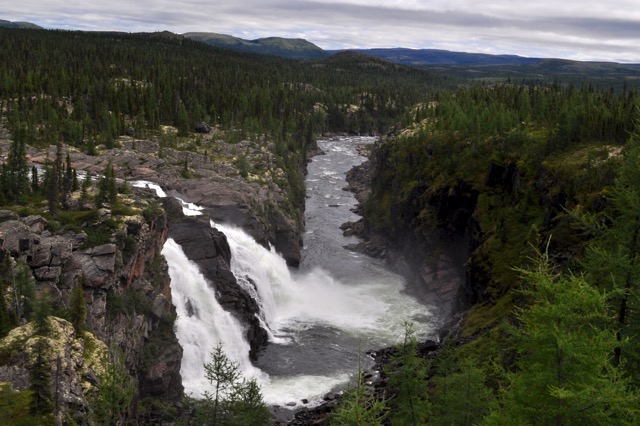
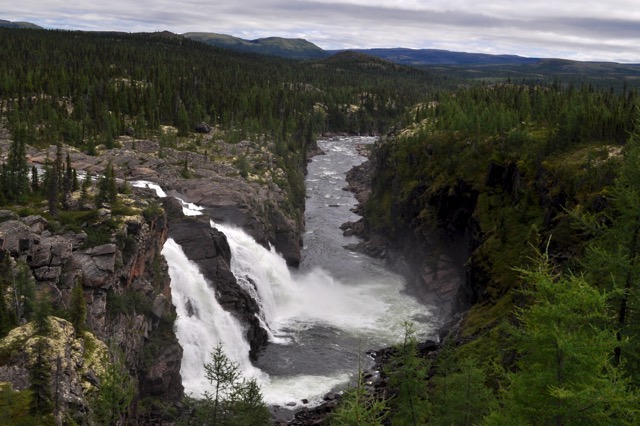
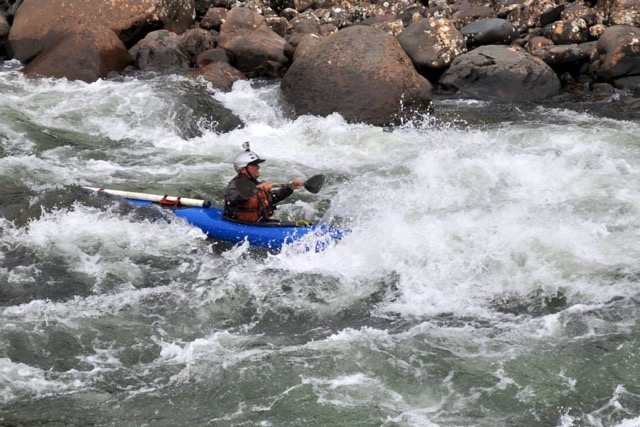
The Kanairiktok River is the longest river in Labrador at 355 km in length. It is known for huge canyons, exciting rapids, and the f-world…falls. There will be five sets of water falls that we will portage around. If we are lucky, we may catch a glimpse of black bear, timber wolf, moose, woodland caribou or wolverine. We are sincerely hoping to not see any polar bear along the coast or anywhere on the trip for that matter (we don’t want to be lunch). It is a river that seldom sees paddlers and I look forward to the privilege of another deep wilderness experience in Labrador once again.
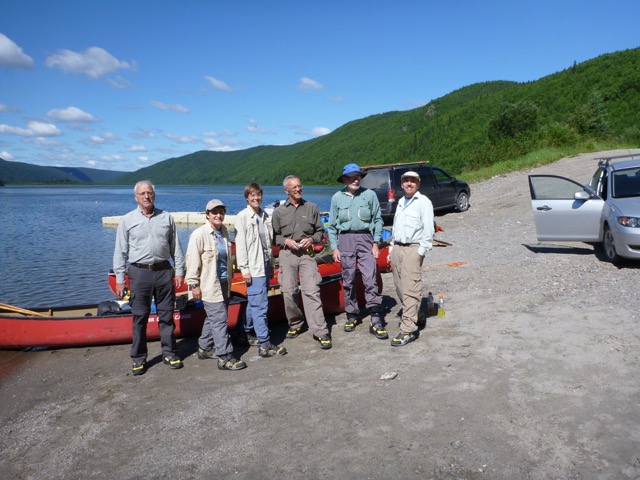
We are paddling with our George River turned Churchill River companions: George, Lew, Joe and Paul. This will be our fourth trip together and I look forward to spending time in the woods with such a skilled team. Days on the river will be long and tough but we’ll rest and recover around the campfire each night. Joe, George, and I have been busy running our dehydrators getting all of the meals ready for the trip. We’ll paddle hard but eat very well!
If all goes as planned, we’ll be flying to our put-in on August 1. I’ll be posting SPOT and audio updates from the trip so please follow along on this latest adventure! We’d love to have you!
Hope is a state of mind, not of the world. Hope, in this deep and powerful sense, is not the same as joy that things are going well, or willingness to invest in enterprises that are obviously heading for success, but rather an ability to work for something because it is good.
–Vaclav Havel
As a single footstep will not make a path on the earth, so a single thought will not make a pathway in the mind. To make a deep physical path, we walk again and again. To make a deep mental path, we must think over and over the kind of thoughts we wish to dominate our lives.
–Henry David Thoreau
I am a member of a team, and I rely on the team, I defer to it and sacrifice for it, because the team, not the individual, is the ultimate champion.
–Mia Hamm
When one door of happiness closes, another opens; but often we look so long at the closed door that we do not see the one which has been opened for us.
― Helen Keller
To put meaning in one’s life may end in madness, but life without meaning is the torture of restlessness and vague desire-It is a boat longing for the sea and yet afraid. –Edgar Lee Masters
I like nonsense, it wakes up the brain cells. Fantasy is a necessary ingredient in living, it’s a way of looking at life through the wrong end of a telescope. Which is what I do, and that enables you to laugh at life’s realities.
–Dr. Seuss
In childhood, we yearn to be grown-ups. In old age, we yearn to be kids. It just seems that all would be wonderful if we didn’t have to celebrate our birthdays in chronological order.
~Robert Brault
The sun would be better than a flashlight, except it doesn’t work at night. It probably needs to recharge its batteries from running all day.
–Jarod Kintz
We all want to do something to mitigate the pain of loss or to turn grief into something positive, to find a silver lining in the clouds. But I believe there is real value in just standing there, being still, being sad.
― John Green
Let your life mean something. Become an inspiration to others so that they may try to do more and to become more than they are today.
–Thomas D. Willhite
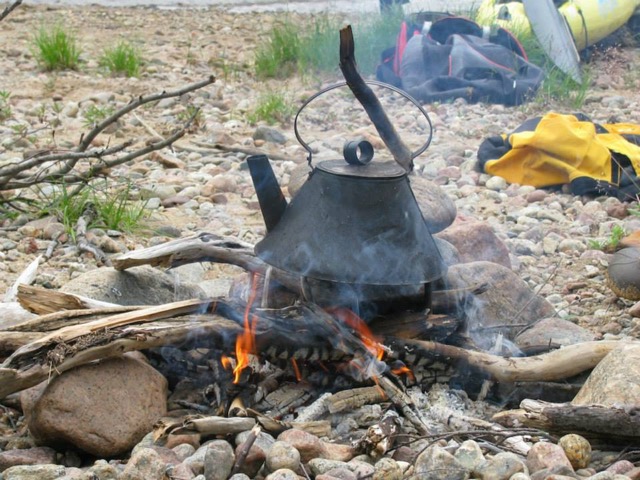
Jim Price lived his life with his arms wide open. He met everyone and every experience with a grand hug, a broad smile, and twinkle in his eye. You always knew the moment Jim arrived at any gathering. The energy in the room was immediately uplifted by his buoyant spirit and you knew his booming laughter would soon fill the space inviting you to draw closer to hear what he had gotten into lately. Since Jim’s death on Wednesday, we’ve all been overwhelmed with shock and grief that he was taken away from us so suddenly and without warning. Between these huge waves of emotion, much like the huge waves off the coast of Newfoundland that Jim loved to paddle so much, we’ve been telling stories. Stories of Jim, stories of our adventures with Jim, and most poignantly, we’ve been telling the stories of what Jim taught us through the way he lived his life. Arms wide open. Jim was a teacher. I swear that he taught half of the province to paddle. Paddle a kayak. Paddle a canoe. Even a paddle board. I remember seeing him just after he completed a paddle board instructor certification course. He spoke with great excitement of having another paddling sport to instruct, another way to encourage others to join him in his beloved outdoors, on his beloved waters. Jim taught me to whitewater kayak soon after I arrived in St. John’s twenty years ago. It was the beginning of a dear friendship that spanned rivers, waves, peaks, and canyons. I followed him down rivers that were likely beyond my skill level but I knew he had my back, that he could pull me out of any situation that I got myself in. He was like a mother duck leading her ducklings into the current for the first time. He picked the right course, showed the way, looked back over his shoulder, and called out a deep belief in what you could do. You see, another gift that Jim had and gave, was a deep, abiding confidence in himself and in you. I’ve been watching videos of trips that Jim and I shared. He was often the cameraman because of his skill. He could go out ahead and position himself to catch the action. As he captured the scene, his commentary was a mix of sportscast and encouragement. He could both comment and coach. In hindsight, you could tell how close you’d come to capsize or other disaster by how quickly Jim was calling out instructions. The harder and faster he called out for you to paddle, the harder and faster you’d better paddle. Once the excitement had been mitigated by your newfound paddle speed, his voice immediately returned to calm praise for what you had just accomplished. Jim was a “yes” man of the finest kind. We can hardly remember a time he said no. “YES, you can run this rapid!,” Jim must have said to a hundred or more of us. “Yes, you can borrow my boat,” he answered many a time. “Yes, I’ll share all the beta I learned last week on my scouting mission–come on over and I’ll show you the maps,” Jim said to anyone who asked. Generous. Gregarious. Gracious. Jim gave much and often. He gave of himself, his knowledge, his skills, and his leadership. He completed many first descents of rivers around the world and throughout Newfoundland. He also completed hundred’s more descents of the same rivers while teaching and coaching others. Whether you were meeting Jim for the first time or for the hundredth, you knew Jim was fully in, fully present, and fully ready to do whatever the moment demanded/requested of him. From Jim, I learned to say yes every when every fibre of my fear was yelling no while at the same time, respecting the water and the hazards and knowing when to get off the sea or when to walk around a rapid. One time, while we were in the Grand Canyon, I was totally spooked by a rapid. He gently tried to coach me through it but when he realized that this one had too much of a hold on me, he volunteered to first take his kayak through, and then walk back and row my raft. A big hole managed to grab the raft for a spin but Jim calmly and skillfully coaxed it out and then gave me back the oars and said, “You got this-let’s go down river.” Jim was a storyteller. His love of telling stories and jokes is legendary. Whether he was cooking for clients on a trip he was guiding or teaching a paddling class for my students, he livened the moment with a story or two. Jim loved a campfire. He could turn out a gourmet meal over one but mostly I remember how much he liked to relax by the fire telling stories and spinning yarns. Long into the night, either with friends or alone, he would keep the fire burning and the next morning tell stories of the blazing white moon, the magical starlight or the dancing of the colourful northern lights. Jim sucked the marrow of his days’ bones. He savoured and reflected on the day, on the trip, on his life through the art of story so it seems fitting as we celebrate his life that we tell stories, lots of stories, of Jim and his deep and profound legacy he has left for his family, for us, for the province. Rest in peace Jim-though it’s hard to imagine you resting as it’s something we never saw you do much off. Wherever it is you or your spirit is, I hope there is plenty of firewood, water in your kettle, and a story to tell.
Without leaps of imagination or dreaming, we lose the excitement of possibilities. Dreaming, after all is a form of planning.
― Gloria Steinem
Find your Fit Activity of the Day: Base Race
Mark the boundaries of the area with the hula hoops; 1 hoop in each corner of the gym, and 1 hula hoop in between the 2 corners on the longest side of the gym.
Split the class up so that each hoop has an even number of people.
The tagger must begin by standing in the center circle of the gym.
The person designating as the tagger yells “Get to Base Camp!” Once this is said, everyone must run to a different hoop.
If someone is caught, they become a tagger along with the previous tagger(s).
The game ends when everyone is caught.
*This game replicates the different base camps spread throughout different elevations of Mount Logan, which provide shelter and warmth and a place to eat for the climbers.
You’re never given a dream without also being given the power to make it true.
― Richard Bach
Did you know?:
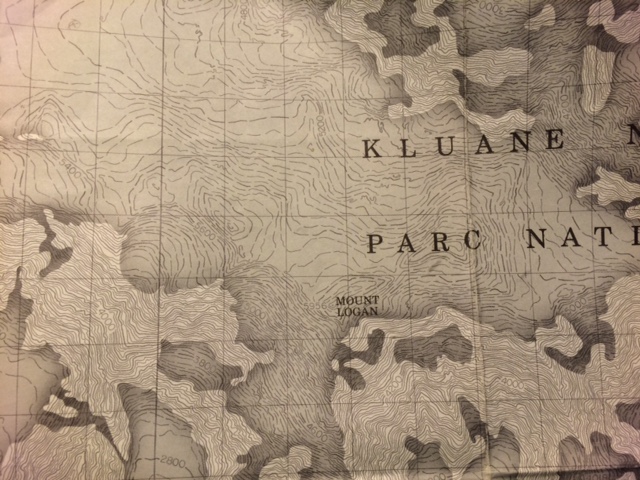
Mount Logan is the largest non-volcanic mountain in the world when measured by its base.
Find your Fit Activity of the Day: There’s a Storm a’ Brewin’
Objective: Allow students to become more comfortable with each other while learning some scientific terms
Activity description: Jack Frost (Instructor) calls out actions and the students who do not complete the task fast enough become a minion of Jack Frost. Minions chase students that aren’t able to complete the task fast enough in the next round.
Actions:
Windward Gale: Students run to the front of the gym
Leeward Gale: Students run to the back of the gym
Avalanche: Back to back with a partner with hands over face
Nightfall: Huddle together in groups of four
Quicken the Pace: Act out climbing a rope up a cliff-side
Icefall: Students duck and head towards a wall of the gym
Heavy snow: Students walk around the gym shielding their eyes as though they were walking through a storm
Be careful what you water your dreams with. Water them with worry and fear and you will produce weeds that choke the life from your dream. Water them with optimism and solutions and you will cultivate success. Always be on the lookout for ways to turn a problem into an opportunity for success. Always be on the lookout for ways to nurture your dream.
― Lao Tzu
Did you Know?
Mount Logan is the largest ice sheet in the world that is not part of an ice cap.
Find your Fit Activity of the Day: Thin Ice
Materials Needed: 9 hula hoops per group.
Using the nine hula hoops the instructor should make a grid which the children must navigate. The ice is only safe on certain hula hoops meaning there is only one correct way to get out of the “ice”. If a student were to walk on thin ice they would have to go to the exit the way they entered and go to the back of the line. Eventually by trial and error and the students remembering which routes are correct they will be able to exit the ice and finish the game.
It’s strange how dreams get under your skin and give your heart a test for what’s real and what’s imaginary.
― Jason Mraz
Did you Know?
Mount Logan is located in the St. Elias Mountains in the Yukon Territory.
Find your Fit Activity of the Day: Mountain Height Fitness
Equipment:
Mats
Weights
Exercise balls
Medicine balls
A list of the heights of the various peaks of Himalayan Peaks
Introduction: Climbing to a summit of a mountain takes a lot of strength and conditioning. Climbers spend hours of a day skiing or hiking up a mountainside while carrying a heavy backpack and sometime even pulling a sled as well. They must be fit and ready for the expedition therefore this activity will be base around fitness.
Activity: Pick out 6-10 peak heights (depending on class size and equipment on hand) and set up stations around the gym. At each station the students will have to complete the height of the peak but doing 4 fitness related activities. For example, the height of Mount Everest is 8848 m therefore, the students can complete 8 jumping jacks, 8 sit ups, 4 burpees and 8 high knees and then move onto another station. You should pick out 4 activities for each station but let the students decide what activity they want to do for each number of the height. Continue rotating the students through as many stations as you wish.
Walk with the dreamers, the believers, the courageous, the cheerful, the planners, the doers, the successful people with their heads in the clouds and their feet on the ground. Let their spirit ignite a fire within you to leave this world better than when you found it…
― Wilferd Peterson
Did you Know?
Mount Logan was first climbed by A.H MacCarthy, H.F. Lambert, A. Carpe, W.W. Foster, N. Read and A. Taylor.
Find your Fit Activity of the Day: Crevasse Crossing
Objective: To get students moving and thinking; to get them to come up with strategies on how to cross over a separation in the floor which depicts the crevasses you will encounter on Mount Logan. To do this they must get one person at a time across the “crevasse”, while getting all the equipment to the other side as well.
Materials Needed: Per group; 2 cones, 1 mat, 1 rope, 1 hockey stick, 1 ball, 1 bean bag.
The object of the game is for each team to get across the crevasse without falling into it. Also you have to get all your equipment across the crevasse. If any part of the students body touches the space between the cones (known as the crevasse), they have to drop what equipment they have and return to the starting shore. Students have to figure out how to use the equipment to cross the crevasse. The fun part is once one or two students get across they have to send it back to the other side somehow. Many times they will get stuck and have to rescued by another student on another piece of equipment. It forces the students to work strategically together as a group.
Every book has a soul, the soul of the person who wrote it and the soul of those who read it and dream about it.
― Carlos Ruiz Zafón
Did you Know?
When climbing Mt. Logan there are usually six different camps. How many camps did TA’s team use?
Find your Fit Activity of the Day: Snow Dragon Tag
Activity Description: Divide the class into groups of 5 or 6 students. Students stand in a line and put their hands on the shoulders of the students in front of them forming one long snow dragon. The student in front is the snow dragon’s head and the student at the back is the tail. The head tries to catch the tail and the tail tries to evade the head. If the head catches the tail, the head then links onto the tail and becomes the new tail. The second person in line becomes the new head and play continues.
Our truest life is when we are in dreams awake.
― Henry David Thoreau
Did you Know?
Mount Logan was first climbed on June 23, 1925.
Find your Fit Activity of the Day: Heat Loss Dance
Purpose: To teach students the different ways they can lose heat outdoors.
Using the teachers specifications as a guide, the students will dance out the 4 types of heat loss.
– The teacher shows the class a diagram of the forms of heat loss which includes CONVECTION, CONDUCTION, RADIATION, and EVAPORATION.
– As a group, the teacher and class walk through the general space following the forms of heat loss. Name a form of heat loss and have the children move around the gym while using the corresponding dance (allow the to make up their own). Walking through the different types will give the students a better idea of basically how heat loss works as well as memorizing the four types.
It takes a lot of courage to show your dreams to someone else.
― Erma Bombeck
Did you Know?
There are many mountains with high elevations in Kluane National Park include Mount St. Elias (5,489m), Mount Lucania (5,226m), King Peak (5,173m), Mount Steele (5,073m), Mount Wood (4,842m) and Mount Vancouver (4,812m).
Find your Fit Activity of the Day: Zero Zero Clear
“Zero” and “Clear” are two words that are commonly use for mountaineering and for expeditions. “Zero” means stop and “Clear” means go. Communication between members is extremely importation for the safety of each group member. This activity will help introduce group members to one another as well as practice their communication skills.
Split up class into as many groups as needed. Get students to sit in a circle on the floor and get one person to stand up. This ice breaker is similar to “Duck Duck Goose” in which one person will start tapping heads saying “Zero”. Once they say, “Clear” that person will get up and run the opposite way as the tagger. Once they met each other running they must stop and shake hands and say “Hello teammate how are you?” and then continue running to try and beat the other to the spot. Whoever arrivals last then will be the tagger.
You never know what’s around the corner. It could be everything. Or it could be nothing. You keep putting one foot in front of the other, and then one day you look back and you’ve climbed a mountain.
― Tom Hiddleston
Did you Know?
Because of tectonic shifting, Mount Logan is still believed to be growing.
Find your Fit Activity of the Day: Shoveling Machine
Divide group into even numbered teams (4-8 participants are ideal).
Advise teams to make themselves into a machine that can shovel snow, with as many parts (gears, levers, etc.) as they can devise. The machine should have motion and sound, and include all team members.
Give the teams five minutes to prepare their machine. Once the time is up, the teams take turns presenting and their machines.
Go confidently in the direction of your dreams. Live the life you’ve imagined.
― Henry David Thoreau
Did you Know?
In order to climb Mount Logan, you need to obtain an Icefields Permit, and submit an application to participate in the expedition.
Find your Fit Activity of the Day: Stuck in the Ice
This tag game works much like the tag game bridge tag. To start the game, choose three to five taggers. They act as freezers. When a tagger freezes another student, he or she must freeze into the ice in a manner in which other students can crawl under them. Once a student crawls under the frozen person who is ‘stuck in the ice” they are no longer frozen and are free to return into the game.
All people dream: but not equally. Those who dream by night in the dusty recesses of their minds wake up in the day to find it was vanity, but the dreamers of the day are dangerous people, for they may act their dreams with open eyes, to make it possible.
― T.E. Lawrence
Did you Know?
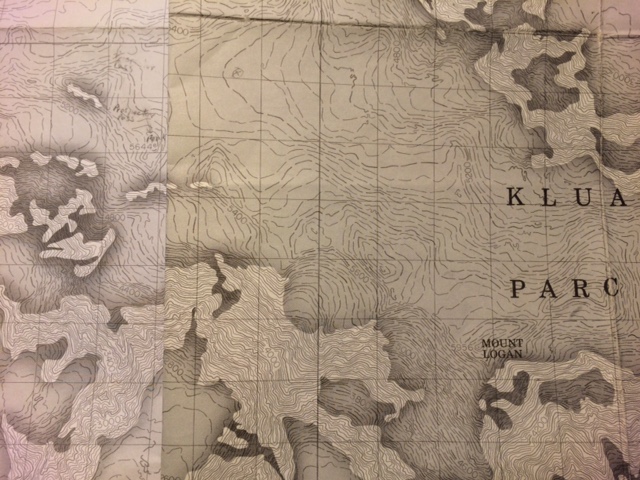
Kluane National Park and Reserve of Canada covers an area of 21,980 square kilometres. It is a land of precipitous, high mountains, immense icefields and lush valleys that yield a diverse array of plant and wildlife species and provides for a host of outdoor activities. Kluane National Park and Reserve is also home to Mount Logan (5959 m/19,545 ft), Canada’s highest peak.
Find your Fit Activity of the Day: Mountain Supplies
Materials Needed: Per group 5 bean bags of 5 different colors.
The object of the game is for students to do mathematical conversions to earn mountain supplies (fool, fuel, tents, climbing gear, ropes). There are to be five trail lengths which the students must convert to centimeters, meters and kilometers. When they have the correct answer they must run to the teacher with the answer. Each correct answer gives them a corresponding color bean bag. Once all 5 bean bags are collected the group has all the supplies needed to climb Logan.
There are many different ways to climb Mount Logan, including flying out of Silver City, flying onto Hubbard Glacier or flying onto Quintino Sella Glacier.
Find your Fit Activity of the Day: Expedition Team Line Up
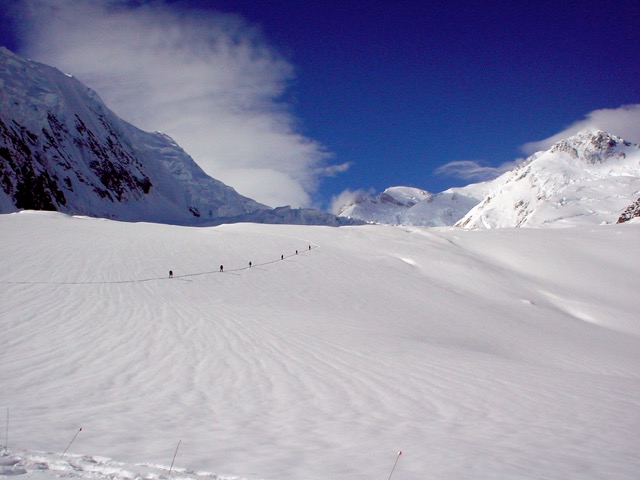
As you are making your way across a glacier, you and your expedition team are tied into a climbing rope so everyone can travel safety. For this ice breaker, we are going to form our expedition line by doing a simple task.
Pass out a card to each student in which they cannot show anyone else around them what card they have. The students must arrange themselves in numerical order as well as suit order i.e. all hearts, then diamonds, spades and then clubs along the climbing rope/line on the gym.
Rules:
They have to use non verbal cues to organize themselves in order
The cannot show their card to anyone
Note: To make it easier just give everyone a number or they first letter of their name. To make it harder get them to order themselves by birthdays.
Far away there in the sunshine are my highest aspirations. I may not reach them, but I can look up and see their beauty, believe in them, and try to follow where they lead.
― Louisa May Alcott
Did you Know?
Mount Logan has an altitude of nearly 6,000m (5959m to be exact).
Find your Fit Activity of the Day: Frostbite Tag
Objective: To get students moving and warmed up before the main activity, while replicating being frostbitten, something which could occur on Mount Logan due to the extreme cold temperature.
Materials Needed: 3-5 pool noodles (icicle) (depending on class size)
Activity Description:
– Choose 3-5 taggers (could be more or less depending on class size)
– Taggers each have a pool noodle (icicle), on the teacher’s command, the students run around the gymnasium until touched by an icicle.
– If they are tagged, they must stay still, with their feet spread apart, they are considered “frostbitten”
– The person tagged is “frostbitten” until another student in the class slides through their legs, unfreezing them.
– STUDENTS CANNOT BE TAGGED WHILE UNFREEZING A CLASSMATE!
If you have built castles in the air, your work need not be lost; that is where they should be. Now put the foundations under them.
― Henry David Thoreau
Did you Know?
There are approximately 12 peaks on the summit, with the highest being Mount Logan.
Find your Fit Activity of the Day: Climb the Mountain
Objective: To get students moving a lot in a short amount of time. While learning some facts about mountains
Materials needed: individual jump ropes for roughly 1/2-2/3 of class, 10-20 hula hoops, 4-8 long jump ropes, 6-10 small (6-10″) hurdles, 15-20 poly spots, 8-10 cones/domes, cones to mark challenges & course, music to motivate
Start by telling the students they get to hike to the top of a mountain. On their way to the top they will encounter several obstacles, modify the story based on grade level.
– At the beginning of their hike they perform 10 push-ups (traditional or modified) to scare the bears off the mountain. The students then hike to the hot rocks
– Hot rocks are set up as a jump rope area. Students jump rope 15 times on the hot rocks (because our mountain is a volcano also), then jog to the swamp.
– The swamp consists of hula hoops set up in a line of two rows. Students run through the hoops with high knees (so they don’t get stuck in the swamp). Then they jog to the rivers area.
– The Students leap over the rivers, which are two long jump ropes running parallel to each other, use any number of rivers. Then students hike or jog to the creek.
– Students cross the creek by hopping from rock to rock (polyspot to polyspot). Then then continue to the caves.
– The caves are picnic tables with benches. Children perform 10 bench push ups or 10 crunches to scare away the trolls that live under in the caves (under the tables).
– Then they run over to the boulders. Students jump or leap over the boulders (hurdles), then continue to the switchback path. Since switchback paths are used for very steep places in a trail, I mark a zigzag pathway using cones.
– Then onto the rocky ledge at the top of the mountain. Students have reached the top of the mountain when balance on the rocky ledge (for our school this is the cement curb around our sandbox).
– Students then take a different pathway down the mountain, to the beginning. They have the option of taking the short cut (monkey bars) across from one side of the “ledge” to the other.
– Students continue hiking up and down the mountain until time is up. (usually 5 – 8 minutes – a few songs when playing music).
Some people see things that are and ask, Why?
Some people dream of things that never were and ask, Why not?
Some people have to go to work and don’t have time for all that.
― George Carlin
Did you Know?
Because of how close Mount Logan is to the Gulf of Alaska, severe snow storms can strike the top of this mountain all year around.
Find your Fit Activity of the Day: Odd/Even Tag
Have the students start in partner formation.
One student will be designated as odd numbers, while the other student is designated even numbers.
Be aware of your space, and remind students of safety concerns throughout the activity.
Have the students move in general space as “friends” (near each other).
Once the teacher yells freeze, partners will stand back to back.
The teacher will call out odd or even, or the teacher can call out math problems to solve. For example, 3 x 4 = 12 so even would be it.
The object is to tag your partner only. If you tag your partner, your partner than becomes the tagger.
The game continues until the teacher shouts freeze, where partners go back to back again, and there will be a new math problem called.
Getting to the top is optional, getting back down is mandatory. A lot of people forget about that. ― Ed Viesturs
I’ve read several of Ed Viesturs’ books. He is the first American to summit all 14 8000 metre peaks without supplemental oxygen. It took him several attempts to reach the summit of some of them. I remember reading that he had stopped a summit attempt 150 metres below the top because “it didn’t feel right.” He respected his inner voice/intuition and it had kept him safe over the course of many, many expeditions. I, too, have such a voice. Most recently, it keep me off Everest 2014 and Everest 2015 and for that, I am grateful that I listened.
In my study of Buddhism, I’ve been taught to pay attention to the causes and conditions that bring each moment to fruition. I do my best. Some moments, I can see them clearly; other moments they are too muddled together to tease them apart.
I have had a relationship with PTSD for the past 46 years. Sometimes, it is hibernating quietly, hidden blissfully from my view. Other times, it overwhelms with the fury of a 100 year winter storm. Sometimes, it is my wise teacher and other times, my tormentor. It’s presence in my life ebbs and flows on an unscheduled tide than I neither understand not control and even though, I continue to grow to be the stronger one in the duo, sometimes I’m tripped up by echoes of traumas past.
Most often, it can take up to a week for the causes and conditions (i.e. weather and logistics) to allow a team to gain flight access Mount Logan. My trip, this year, was the exception. We flew in earlier than we were scheduled to and gorgeous weather allowed us unprecedented access to begin climbing. My luggage had arrived late in Whitehorse so I had to fly to the mountain not having had a chance to organize my gear into systems. Systems which help me know exactly where each bit of kit is stored in my backpack so I can access it quickly in case of storm or other emergency. It usually takes a few days to get in a rhythm and have it all sorted. Arriving to base camp around 10 pm, we got the tent up and I rummaged around, trying to find all I would need for a reasonably warm night. It was pretty cold out. Minus 20C or so.
It was a long, very cold, and nightmarish night. One of my worst ever in the mountains. My dragon-like PTSD partner seemed to have awoken after a decade’s long sleep. My heart pounded. Adrenaline coursed through my body like fiery lava spilling me over into restless fear, unsettled exhaustion, and wanting to run. As my practice of Buddhism taught me, I kept my seat. I stayed. I stared down the fiery assault, breathed compassion for the myself and the dragon, in and out and got up the next morning, and carried a load to Camp One. I did the same the second day after a better night.
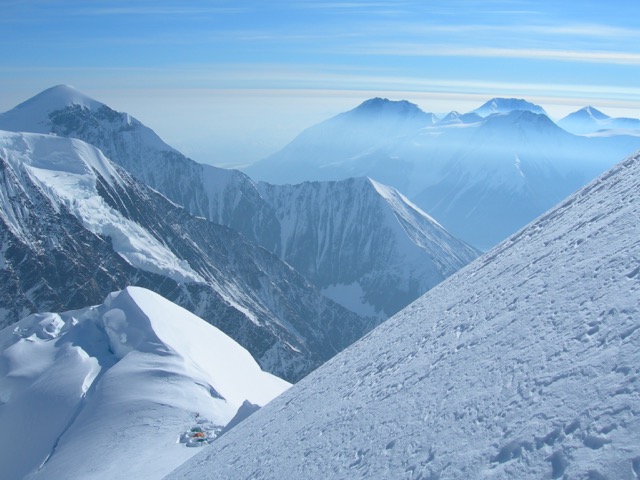
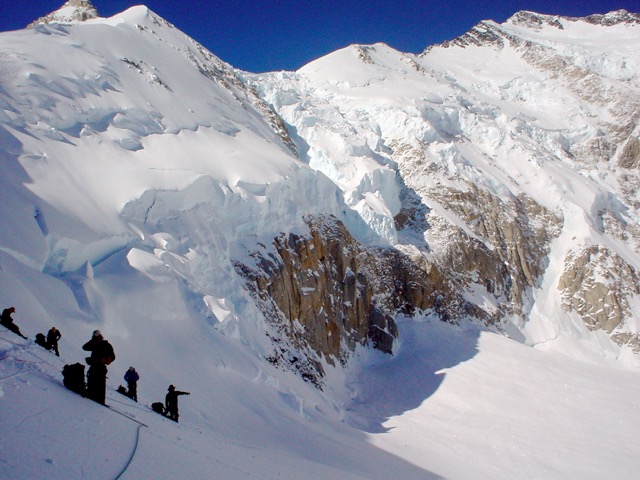
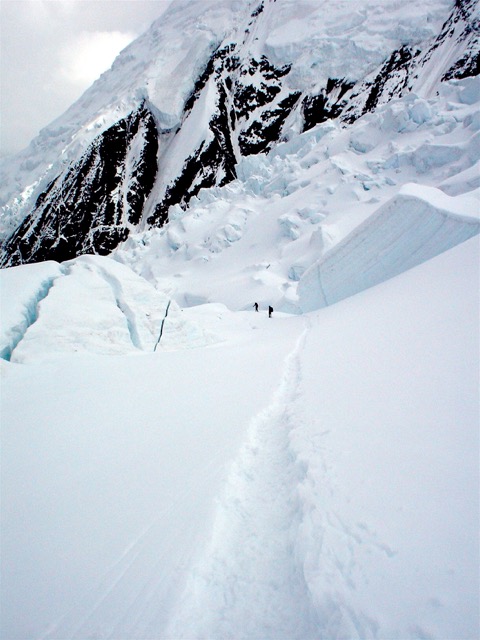
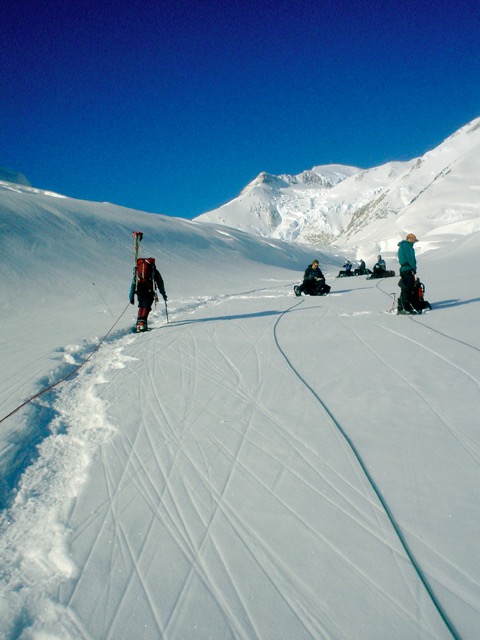
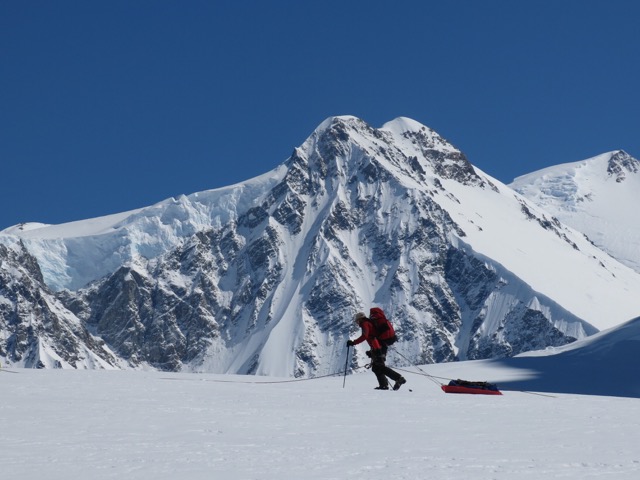
By the end of the third day, we’d already made our first big carry to Camp Two at 4100 metres. As I skied each of those first three days, I revelled in the glory of the immense landscape I was traversing and thought about the many dreams, wishes, and goals I carried with me as a part of Mission 5959. I read the messages on my skis often and said them over and over again to myself. Anytime, I was moving, the dragon slept as if a child pacified by the rocking of a crib. Anytime, I stopped, it woke. Cried. Curled into a ball. Wished and wanted safety. I did my best to sit, pay attention, meditate, and find some ground amidst the cold, white towers that surrounded us.
After the carry to Camp Two, my inner voice that had kept me safely away from the heights off Everest for the past two disastrous seasons, began to enter the conversation.
“Don’t go back to Camp Two,” it said the first time.
“Why?” I asked back.
The wind, whipped into a frenzy by a ferocious Logan storm, kept me from hearing the answer.
As each gust died away, I heard the repeated whisper, “Don’t go, don’t go, don’t go higher.”
In response, I wrote in my journal, I organized my gear, I sat quietly trying to discern the source and meaning of the quiet words ricocheting in my mind.
“Was this the echoes of dangers past propagated by the newly woken dragon’s presence?” I wondered more than once.
“Could it be the normal anxieties of starting a cold, hard, sufferfest expedition in a remote, cold place? I asked myself over and over again.
“Should I take this message seriously?” I mused.
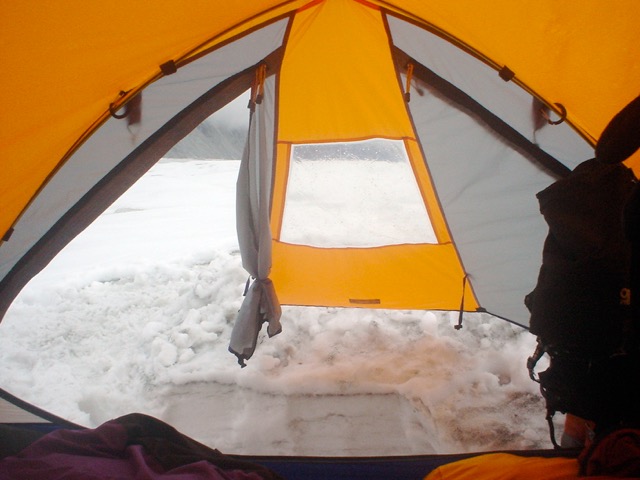
Pinned to our backs in our tents for the better part of three days as 175 km/hr gusts pummelled our camp, my mind wrestled with these and other questions. It was like watching a Saturday cartoon where the questions and answered wrestled in a swirling ball of animated fur and feathers. At the end of each storm-filled night, I waited with dreaded anticipation of the day’s plan.
“Were we headed up higher or staying put?” I called out of the tent when I heard footsteps in the morning.
On each of the three mornings where the answer was that we were staying put, intense and immense waves of relief washed over me and I proceeded to have a good day reading, putzing, eating, drinking, and navigating the world of expedition tent-boundness.
On the fourth morning, the storm wasn’t quite finished but it had dropped enough to allow us to travel up or down. We were running low on food at Camp One so we soon had to choose one direction or the other. Down to base camp to re-fill or up to Camp Two to continue climbing. When word arrived that we were moving up, most, if not all except me, rejoiced in finally being freed to continue the expedition. I, when hearing the up direction, was immediately buried with a sense of doom and dread and heaviness.
The whisper became more insistent, “DON’T GO, DON”T GO, DON”T GO TO CAMP TWO”, it yelled. I spoke to the guides and expressed some of my doubts and sought out the options. They were kind and understanding and offered words to calm and soothe the ever-louding voice. With that in place, I agreed to make a go for Camp Two. I started to pack. I grew nauseous. I breathed. I packed. I chased the thoughts and tried to catch them to understand their meaning. I thought about Andy who was on the trip at my invite. I thought about all the dreams I was carrying. I packed more. I stepped out from the tent into the wind and took down the tent. I packed my sled. Put on my harness. I helped others pack.
Each new gust of wind magnified the echoing message, “Don’t go, don’t go.”
I moved my gear to the rope. I tied in my sled. I tied in my harness. I clipped in my boots. We started to ski in unison across the flat expanse of the glacier. This time, movement didn’t quell the dragon. It didn’t quell the voice.
Both were screaming, “Don’t go, don’t go.”
I skied with them that way for about an hour hoping the gentle swaying of my arms and rhythmic swinging of my legs might lull the message away so that I would not have to disappoint Andy, my followers, myself. As the last team pulled up beside us and was about to pass, I know this was my last chance to listen to the week-long voice that was urging me to not go higher on the mountain without impacting another teammate.
If I waited any longer to listen and the other rope team went past, I was either locked in to going all the way to Camp Two or asking a teammate to help bring me back to basecamp. Wanting to inconvenience as few other people as possible, I decided, in that fleeting moment to listen. To listen to the voice that has kept me safe on 26 expeditions in the past decade. To listen to the causes and conditions that weren’t quite coming together for me to feel comfortable going higher. To listen to my heart and to my mind. To, for this once, seek safely and comfort instead of adversity. To recognize that although I was physically strong enough, skilled enough, and all packed and ready to go, I didn’t have to. I could have the courage to turn. To listen. To live to climb another day.
Decision made, I was flooded once again with tsunamis of relief. Both Andy and I were in tears as we parted. I wished him the summit and safe return. I turned my back to the mountain, leaving it and the don’t go voice there, and skied back to base camp. I’ll never know what would have happened if I’d continued up, life’s like that. Each day, we navigate thousands of intersections/decisions, some we immediately perceive the impact of, many we do not.
I’m home safe. I’m sad. I’m grieving for the lost climb and for unloved/lost experiences. I’d been dreaming a fairy tale of book-ending an amazing decade of expeditions with Arctic summits, but alas, the dragon showed up and the ending to the story is still being written.
Mission 5959 turned into Mission 4100 and I thank all of those who entrusted their dreams to me to carry as high as I could on the mountain. Dreams don’t always come true…at least on the first go…sometimes needing two, or three, or hundreds of goes. Sometimes dreams shift. They morph. They meld. Sometimes we give up on them. Sometimes they give up on us. Mostly, they are there as beacons asking us to climb high, climb far, and reach for an unknown sky. The summit is just one piece of topography, much like all the others, and I’m grateful for all of your love, care, and compassion as I traverse much of life’s topography climbing, skiing, paddling, and walking towards my dreams.
As I was wondering around Whitehorse, reflecting on my Logan experiences. I wondered into a used book store. I bought a book about canoeing the Yukon River and then turned my attention to the mountaineering section of the store.
Look what I found. My own book. What fun! I told the staff and they were delighted and had me sign the book. They moved it front and center and I had them snap a few photos.
This morning I met up with Tyler, one of the trip’s guides, for coffee and a debrief before my flight. I enjoyed processing the many experiences of the past two weeks and he walked me back to my hotel to catch my shuttle.
Just then, I remembered my book at the store and showed Tyler the pictures. He said he’d like to check it out and I had just enough time to walk to the store with Tyler and buy him my book (at the used price, it was the same as I could buy it from the publisher myself). So I sent Tyler to his plane with some new reading material.
I have no idea what path that book travelled from St. John’s to Whitehorse but it’s now headed to Pemberton, BC and I’m headed home with a new friends, new memories, new dreams, and lots of life lessons. More on those soon when I’m able to type with my ten fingers instead of one thumb (yes I am IPhone Luddite).
Sometimes the dreams that come true are the dreams you never even knew you had.
― Alice Sebold
Did you Know?
Near Mount Logan the temperatures are extremely low. In 1991, a record of -77.5oC was recorded near Mount Logan, which was the coldest temperature recorded outside Antarctica.
Find your Fit Activity of the Day: Mountain Climbers
Objective: This is a fun activity that will integrate math as well as demonstrate the thrill and excitement of successfully climbing a mountain. This is great for larger classes but can also be done with small class sizes. In this activity students will get a understanding of how hard it is to “climb a mountain”, and also the joy that comes along with summitting a mountain. This game can use a variety of locomotion skills, combined with math skills, which makes it a great activity to use in PE class.
Setup for this activity will probably take a few minutes so it would be better to set up prior to class. Start by placing the 15 hoops, of 5 different colors in a mountain/pyramid shape (i.e. 5 in the first row, then 4, then 3 and so on) in the middle of the gym. In each hoop place 2 dice. Place four cones on the four corners of the gym and two at the base of the mountain to signify the starting point. Place the eight hurdles, four on each long side of the gym.
To start, have the students make two lines in front of each of the bottom 5 hoops. The first two students from each line will move into the hoops to start. One student will roll the two dices and add their product, and the other student will do the same. Whichever student rolls the higher product gets to move to the second set of hoops as he or she climbs the mountain and waits to be joined by another student. The student who rolls the lesser product, will have to do a full lap around the gym, hopping over the obstacles (hurdles). Once they do a lap around the gym, they will join a line and wait to “climb the mountain” again. The game continues this way until two players finally reach the peak of the mountain with only one winning and successfully completing the mountain.
Travel back to Whitehorse to begin traveling home (more news as soon as I have a keyboard instead of a phone)
Mission 5959 Dreams Quote of the Day:
Throw your dreams into space like a kite, and you do not know what it will bring back, a new life, a new friend, a new love, a new country.
― Anaïs Nin
Did you Know?
Mount Logan is the highest peak in Canada, and the second highest point in North America behind Mount McKinley.
Find your Fit Activity of the Day: Raven Tag
Materials Needed: Pinnies for taggers.
Activity Description: Starting with 2-5 people being “it” (depending on numbers); the taggers must walk around with arms flying like a raven. When a tagger tags someone, they become a raven as well. The game keeps going until everyone is a raven.






















 TA Loeffler's Adventures that Move